
‘Dying on the vine’: How a farmer ended up with 1,600 tons of unwanted grapes
By Tim Craig October 4, 2026 The Washington Post
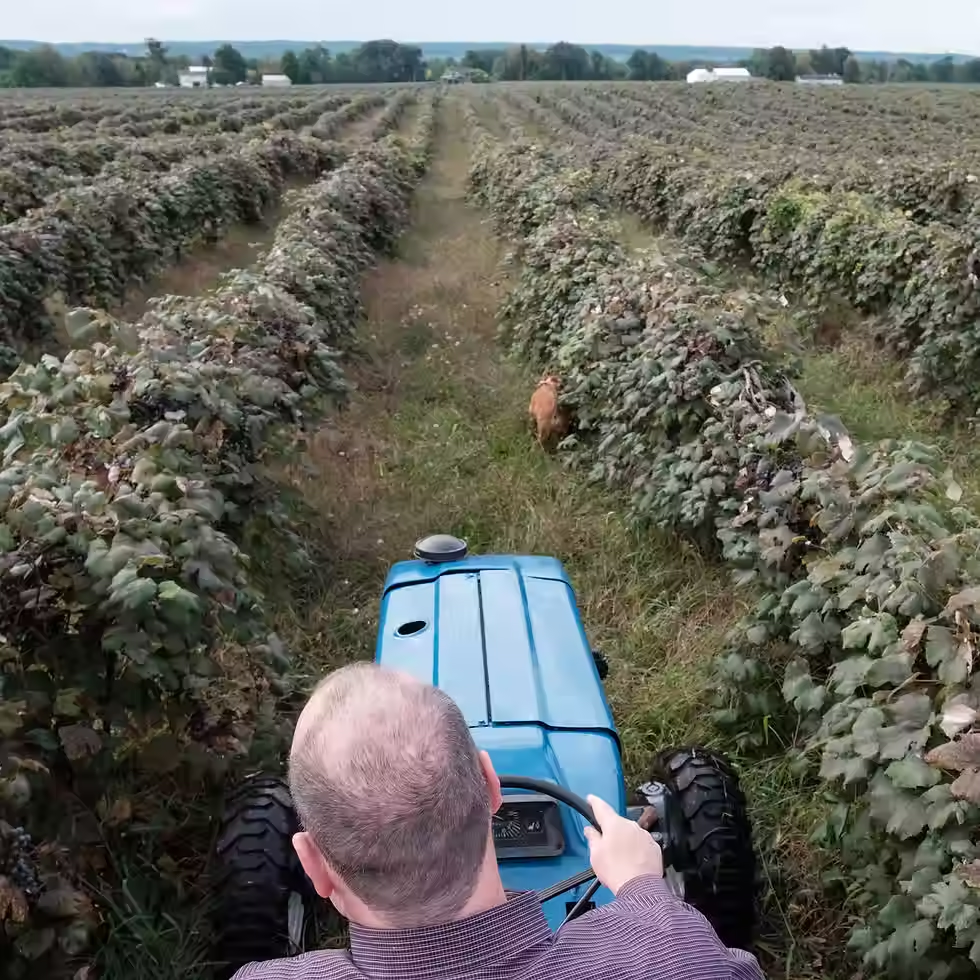
NORTH EAST, Pa. — Mark Terrell knows when it’s time to harvest because the air starts to smell like a freshly opened jar of grape jelly.
That’s usually when Terrell drives his harvesting tractor through his 200-acre vineyard on the shores of Lake Erie, shaking millions of concord grapes from the vines to be processed into juice.
But after a juice company abruptly canceled its contract with Terrell and about 125 other grape farmers in northwest Pennsylvania and western New York, Terrell’s farm vehicles remain parked.
“It’s stressful because I’ve put everything I had into this,” Terrell said as he scanned his 120,000 grapevines. “Now, it’s dying on the vine.”
After months of frantically trying to find a new buyer, Terrell and other farmers in one of the nation’s most abundant fruit-growing regions are preparing to let their grapes fall to the ground. The crisis threatens to reshape local economies in two states as grape farmers come to terms with shifting consumer behavior, including sharp declines in fruit juice and wine consumption.

“If we don’t get demand back up, there is a chance we have to start taking [the vineyards] out,” said Anna-Marie Labowski, a grape farmer and a Pennsylvania Farm Bureau board member. “Some farmers are already putting their land up for sale.”
Terrell has about 1,600 tons of product — at least 200 million individual grapes — that will soon rot. Farmers are scrambling to limit the waste. Some are considering inviting the public to pick their own grapes, though they stress that residents won’t be able to help them eat their way out of this.
“Even if 50 people came here and handpicked grapes, they might get rid of one ton or two tons,” Terrell said. “That is still way short of the scale at which these concord grapes are being produced.”
Grape farmers across the world are experiencing similar problems. Both wine and fruit juice sales have declined dramatically in recent years, a trend driven by healthier habits including consuming less sugar. Some farmers in California are ripping out their vineyards as they search for new crops. Others are selling their land to developers.

The troubles around Lake Erie, the nation’s second-largest grape-growing region behind California, started this spring when Refresco, a Netherlands-based beverage company, canceled its contract with farmers.
Farmers said they were blindsided by the decision after they’d spent tens of thousands of dollars to prune and fertilize their vines over the winter.
“Everything came screeching to a halt,” said Terrell, who was forced to lay off two of his farmhands.
Antonella Sacconi, Refresco’s communications manager, said the cancellations followed “a comprehensive assessment” of “current inventory levels, market demand and long‑term supply needs.”
“We deeply value the relationships we have built with our growers, many of whom we have partnered with for more than two decades, and we recognize the significance of this change for them and their local communities,” Sacconi said. “This decision is the result of sustained grape market challenges and supply imbalances that we do not expect will recover in the foreseeable future.”
The company said concord grape juice sales have declined by 30 percent over the past decade.
Besides being livid with Refresco, grape farmers are divided over who is to blame for their faltering industry.
Several Pennsylvania farmers say the decline in grape juice sales began after first lady Michelle Obama began her campaign to fight childhood obesity, which led some parents and school systems to limit juice products.

But juice, jelly and wine sales subsequently spiked during the pandemic, causing some farmers to expand their vineyards. Juice and wine sales then rapidly started declining as schools reopened and parents returned to work, leading to oversupply.
Near the Canadian border, farmers had hoped some of the surplus could be sold abroad. But that has been complicated by President Donald Trump’s tariff policies, farmers and industry experts said.
“This has been building,” said Russell Redding, Pennsylvania’s agriculture secretary, who added that grape farmers are now being forced to ask what else they can do if demand does not rebound.
There are about 500 grape farms between Erie, Pennsylvania, and Buffalo. The first vineyards in North East, where Terrell lives, were planted by immigrant families around 1850, according to local historians.
Grapes flourish here because Lake Erie’s relatively warm waters help fend off frost in the fall. In spring, the icy lake plays the opposite role by chilling the air so grape buds don’t open too early. The region’s sandy and gravelly soil, left behind after the Ice Age, helps anchor the vines.
Visit The Washington Post for the entire article.


Comments